Website ROI: Is a Business Website Worth the Investment
A website is only worth the leads it produces. Here is how to tell whether yours is paying off — and how to improve it.
Owners ask “is my website worth it?” The honest answer depends less on the site itself and more on whether it is built to convert visitors into leads. A vague brochure site has poor ROI. A clear, fast, locally relevant site that drives calls can pay for itself quickly.
Quick answer
Website ROI = (value of leads from the site minus build and upkeep cost) divided by cost. A website is usually worth it as an owned channel that converts intent-driven visitors — especially compared with a social page you do not control.
The Basic ROI Formula
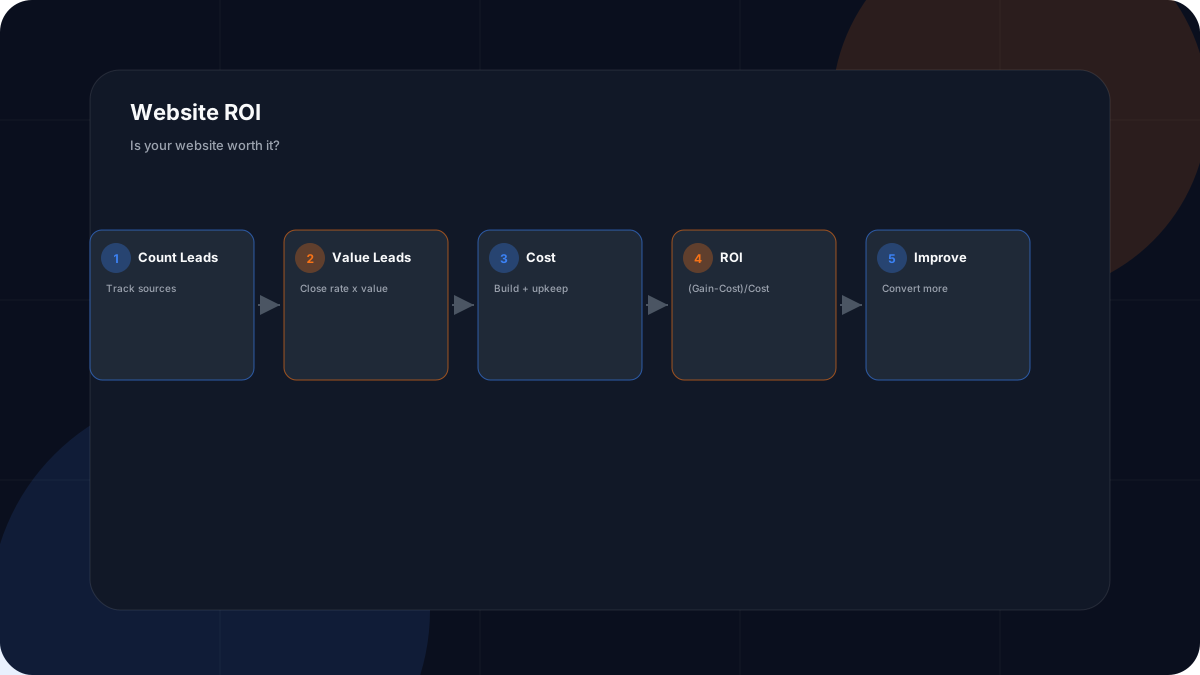
- Count leads attributed to the site per month.
- Estimate value: leads × close rate × average job value.
- Add build cost + monthly upkeep.
- ROI = (annual lead value − annual cost) ÷ annual cost.
Even rough numbers reveal direction. The Website ROI Guide provides a fuller calculator model and benchmarks.
Website vs a Social Page
A Facebook or Instagram page is rented reach. The platform controls visibility and can change overnight. A website is an owned asset that ranks in search and converts people who are actively looking. Use social to drive attention; use the website to capture and convert it.
What Drives ROI Up
- A clear offer visitors understand in three seconds.
- Specific, action-oriented CTAs (“Get a Free Quote”).
- Fast mobile experience under three seconds.
- Trust signals: reviews, credentials, real work photos.
- Local relevance: services and cities named clearly.
These are exactly what the Lead Generation Website Builder is designed around.
Why Some Sites Show No ROI
The usual cause is not traffic — it is conversion. An unclear headline, a buried contact button, a slow mobile page, or missing trust signals means visitors leave without acting. Fixing those often beats buying more ads.
Website ROI Checklist
Frequently Asked Questions
What is website ROI?
Website ROI is the return on the money you spend building and maintaining your site, measured against the value of the leads or sales it generates. A simple version: ROI = (value of leads attributed to the site minus cost) divided by cost.
Is a website worth it for a small business?
For most local service businesses, yes — if the site is built to convert visitors into calls and forms. A website is an owned channel you control, unlike rented social feeds. The key is conversion, not just having a page.
How do I calculate website ROI?
Track how many leads come from the site, estimate their close rate and average value, subtract build and upkeep cost, then divide by cost. Even rough numbers show whether the site pays for itself.
What is a good website ROI?
There is no single benchmark, but a site that pays for itself within a year and then keeps producing is strong. Service businesses with high-value jobs often see far better ROI than low-ticket retailers.
Website vs Facebook page: which is better?
They do different jobs. A Facebook page is rented reach you do not own and can lose overnight. A website is an owned asset that ranks in search and converts intent-driven visitors. The best setup uses both, with the website as the conversion hub.
How long until a website pays for itself?
It depends on traffic and conversion. A site that starts generating even a few qualified leads a month can recover its cost within months. Improvements to headlines, CTAs, and speed shorten payback.
Does a cheap website have worse ROI?
Not always, but a very cheap site that fails to convert or rank can have negative ROI because it still costs time and erodes trust. Spend to the level your leads are worth; a clear, fast site usually beats a pretty but vague one.
Can I measure website ROI without sales?
Yes. Track lead volume, form fills, and calls as proxies. Assign an estimated value per lead based on your close rate and average job value. You do not need final sales to see direction.
What increases website ROI?
Clear offers, strong CTAs, fast mobile experience, trust signals, local relevance, and a simple contact flow. The <Link href='/resources/website-roi-guide' className='text-blue-600 underline'>Website ROI Guide</Link> covers the levers in detail.
Should I treat my website as an expense or an asset?
Treat it as an asset that compounds. Unlike an ad that stops when spend stops, a well-built site keeps attracting and converting visitors. Upkeep is part of owning the asset.
Why does my website not generate ROI?
Usually it is not built to convert: unclear message, weak CTA, slow mobile, no trust signals, or no local relevance. Fixing those typically improves ROI faster than buying more traffic.
Get the Free Master Lead Generator Website Blueprint
This article shows how to measure ROI. The free Blueprint PDF gives the conversion structure — offer, CTA, trust, follow-up — that turns a website from an expense into a lead engine. Download it to apply to your site.
Related Resources
Conclusion
A website is worth it when it is built to convert. Measure ROI from the leads it produces, not from traffic alone, and invest in the conversion elements that move the number. If you want a professional read on your site, download the free Blueprint PDF or request a free revenue review.